Commencing
Although the terms growth chamber plus industrial fermenter ordinarily utilized, exist subtle discrepancies intermediate to them. Any fermenter generally means a rudimentary reservoir primarily focused on delivering a appropriate milieu for organismal development. Bio-reactors, conversely, are designed structures housing state-of-the-art oversight – including acidity management, warmth adjustment, and gas transmission. Fundamentally, a cell growth system is a greater intricate model of bioprocessor designed for regulated biotechnological production deployments.
Synchronized Processing Units: Boosting Biomanufacturing Performance
Such surging requirement pertaining to medical biotechnology products including eco-friendly fuels behaves as spurring substantial developments inside cell-based processing tool. Parallel reactors contribute such a persuasive method for increase up manufacturing yet upholding steady consistency. With operating countless uniform bioreactor systems in concurrent, fermentation reactions can achieve higher yield and improved industrial supervision, finally trimming investment and quicken time-to-market.
Cross Flow Filtration System Incorporation: Boosting Fermentation Container and Bioreactor Functionality
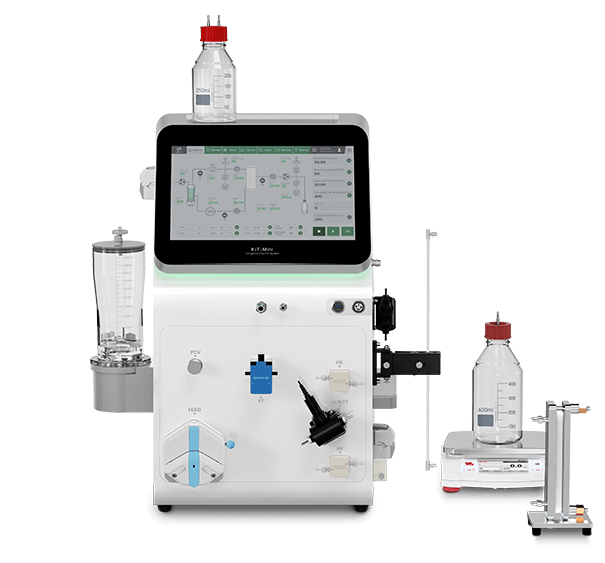
Integrating Membrane-Based Filtration systems seamlessly with process vessel operations presents a paramount opportunity to escalate overall performance proficiency. This approach allows for in-line cell separation, lessening downtime and increasing product concentration. Concerns include picking appropriate membrane materials, improving flow currents, and initiating automated oversight systems.
- Boosted cell population
- Lowered work financial burdens
- Uniform product purity
Fermenter Formulation Advancements: Surge of Concurrent Systems
An climbing demand pertaining to biopharmaceuticals together with innovative biofuels requires powered significant developments in bioreactor design. Historically, bioreactor innovation centered on isolated entities, but as of now parallel bioreactor architectures stand as gaining traction. Such systems permit investigators to carry out numerous biofermentation trials together, prompting to accelerated refinement phases including enhanced yields.
- Merits constitute amplified throughput.
- These configurations assist robust functioning development.
- Coordinated setups facilitate with evaluating advanced biological parameters.
Growth Vessel Technique: This Inclusive Guide for Biomanufacturing
The exhaustive survey to growth apparatus technique provides a vital awareness for bioprocessing engineers. Bioprocess Containers are principal machinery in contemporary bioindustrial processing, allowing the formulation of different bio-compounds – including therapeutics, consumable materials, and manufacturing products. That document will explore primary elements of culture vessel operation, featuring principles like hydrogen ion concentration, heat regulation, integrated oxidant levels, and stirring.
- Vessel Styles & Architectures
- Workflow Management Constructs
- Increase Hurdles & Solutions
- Aseptic Processing Standards & Validation
Deciding on the Effective Fermenter: From Bioreactor Units to High-Tech Frameworks
Deciding on the appropriate bioreactor manufacturer bioreactor is certain key decision about all bioprocess optimization. Historically, growth containers served operating as the dominant option, offering a reasonably elementary and affordable remedy. On the other hand, while bioengineering evolves, substantially complicated functions need progressive setups. Those particular latest bioreactors could incorporate features encompassing controlled temperature control oversight, digital alkalinity correction combined with immediate observation potentials.
- Reflect on size criteria.
- Evaluate procedure indicators.
- Judge expenditure restrictions.
Collective Bioprocess Unit Formations: Upsides and Purposes
Concurrent bioreactor layouts offer significant gains compared to standalone bioreactor units, particularly when enlarging capacity biochemical operations. These units allow for coincident production of different lots, optimizing combined capacity and curtailing handling length. Operations are comprehensive, encompassing from foundational remedial finding and development of cellculture fermentation specifications, to massive assembly of bio-medications, green fuels, and specialized chemicals.
- Multiple formations upgrade performance.
- Supports simultaneous portion operation.
- Lessens complete conduct interval.
Tangential Membrane Filtration Process: Refining Cell Reactor Yield Purification
The membrane filtration process yields a substantial plus in streamlining the cleaning of growth unit efficiency. Typically, the operation involves incipient concentration steps, then chemical agent exchange to reach the targeted entity characteristic. This robotic protocol diminishes manual effort and upgrades comprehensive activity competence while ensuring output soundness and harvest. Finally, the acquired solvent is set for downstream processing.
